
[USR in Japan] Sharing Tsou Culture Through Alishan Coffee at Business Match Tohoku 2026

- Date
- November 12, 2026
- Venue
- Yume Messe Miyagi, Miyagi Prefecture, Japan
- Media Coverage
- 15 local Japanese outlets, including NHK Sendai
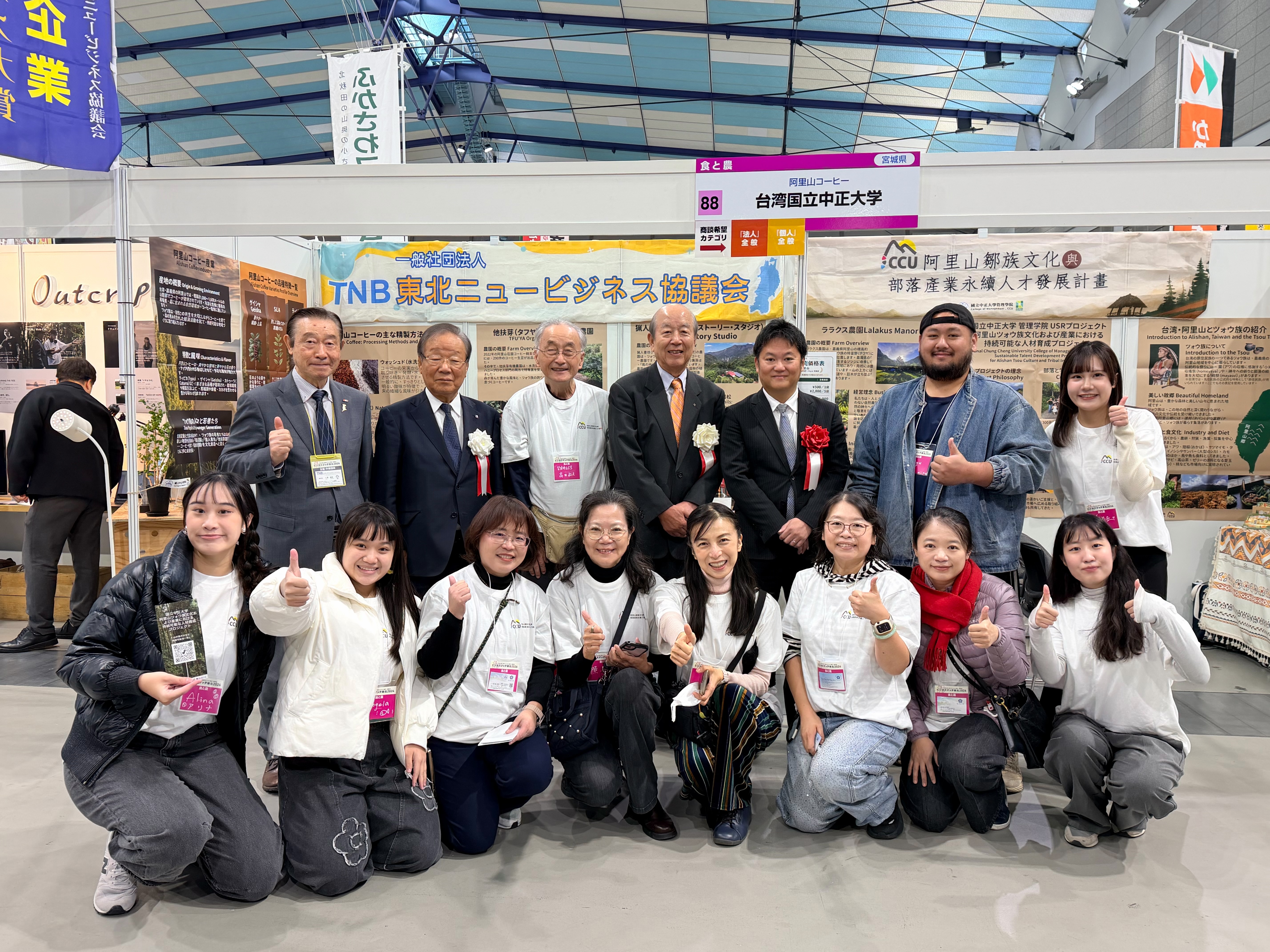
How can a university's teaching and expertise become a force that supports tribal development? On November 12, 2026, the USR project "Alishan Tsou Culture and Tribal Industry Sustainable Talent Development Project," led by the College of Management at National Chung Cheng University, once again took part in Business Match Tohoku 2026, a trade show held at Yume Messe Miyagi in Miyagi Prefecture, Japan. Five faculty members (Toshifumi Takada, Yoko Suga, Yang Wen-fen, Yu Pei-yi, and Fang Hui-chen) joined Alishan tribal farmer Pu Chen-sung, three USR Ambassadors, and other team members in bringing the results of long-term co-learning with the tribe and hands-on coursework to an international exhibition. Through coffee tastings, cultural sharing, and business exchanges, the team opened up new opportunities for local industry.
The exhibition was covered by 15 local Japanese media outlets, including NHK Sendai, giving more people in Japan the chance to learn about the Tsou culture of Alishan and about how university faculty and students are working with tribal farmers to promote local industry.
The project uses the Tsou communities of Alishan as its field site, focusing on how cultural knowledge is understood and passed on, and on how small farmers' products can communicate their value to a wider audience. Through tribal visits, course collaborations, interviews, and video documentation, faculty and students learn from the experiences of local partners, then apply their expertise in marketing, information organization, and cross-language communication to turn local stories into content for outreach. This trip to Japan continued that collaboration, allowing tribal partners to take part directly in the exhibition and conversations, while giving students a real-world setting in which to consider how what they have learned can respond to local needs.
Introducing Japanese Visitors to Alishan Through a Cup of Coffee
CCU's ties with Japan's Tohoku region stem from the academic and community exchanges that Professor Toshifumi Takada of the College of Management has championed for many years. Professor Takada has led Japanese scholars and friends to visit Tfuya, Dabang, and other Tsou communities on many occasions to learn about Tsou culture and local industry. In 2025, through his efforts, the Tohoku New Business Association signed a memorandum of understanding with CCU. Building on this partnership, this year the team used two booths to present tribal culture and products, turning the university's international network into an opportunity for tribal farmers to reach different markets and meet potential partners.
Built around the concept "Discover Alishan through coffee, get to know the Tsou through their stories," the exhibit offered coffee tastings and showcased products such as honey, rice crackers, and drip-bag coffee. Using trilingual posters in Chinese, English, and Japanese, along with videos and on-site explanations, the team introduced the producers, the land, and the culture behind the products. Pu Chen-sung, an Alishan coffee farmer from Hunter's Bookstore, also attended the exhibition in person, telling the tribe's story from his own perspective through coffee introductions, cultural sharing, and song, and hearing Japanese visitors' questions and feedback firsthand.
Pu Chen-sung said:
Usually we host visiting friends in our community. This time, it was our turn to take our coffee out into the world. I hope that when our Japanese friends drink this coffee, they also get to know the people who grow it and the place where we live. Preparing for this together with the faculty and students was also a chance for us to learn from each other. We shared our community's experience, and the students helped turn our stories into content in different languages. I look forward to making more friends this time and bringing what we gain from these exchanges back to our community.
From Classroom to Exhibition Hall: Students Learn by Doing
The project connects courses such as Marketing Management with the tribal field site, encouraging students to start from local experience and practice understanding problems, organizing information, and thinking about how to introduce tribal culture and industry to different audiences. At a pre-departure training workshop, the team invited Pu Chen-sung and Wang Chih-min of Lalakes Forest Honey to share their cultural and industry experience, while students took part in creating multilingual posters, videos, and a website, as well as planning the exhibition. From choosing which information best presents a product's features to introducing culture clearly and respectfully, students applied what they learned in class to real communication situations.
Three USR Ambassadors helped with on-site displays, coffee tastings, and cultural explanations. Tseng Yu-wen, a USR Ambassador who returned this year after taking part in last year's exhibition, said:
Taking part in USR made me realize that to introduce a cup of coffee well, you have to go into the community and truly understand the producers' stories. Last year, many Japanese visitors stopped because of the coffee and learned about the Tsou for the first time. This year, we organized what we gathered from our visits and interviews into posters, videos, and a trilingual website, hoping to make it easier for everyone to understand. For me, the most important thing is to clearly convey what our tribal partners want to say, and to bring back the questions we heard on-site so we can think about next steps together.
Bringing Exhibition Exchanges Back to the Classroom and the Tribe
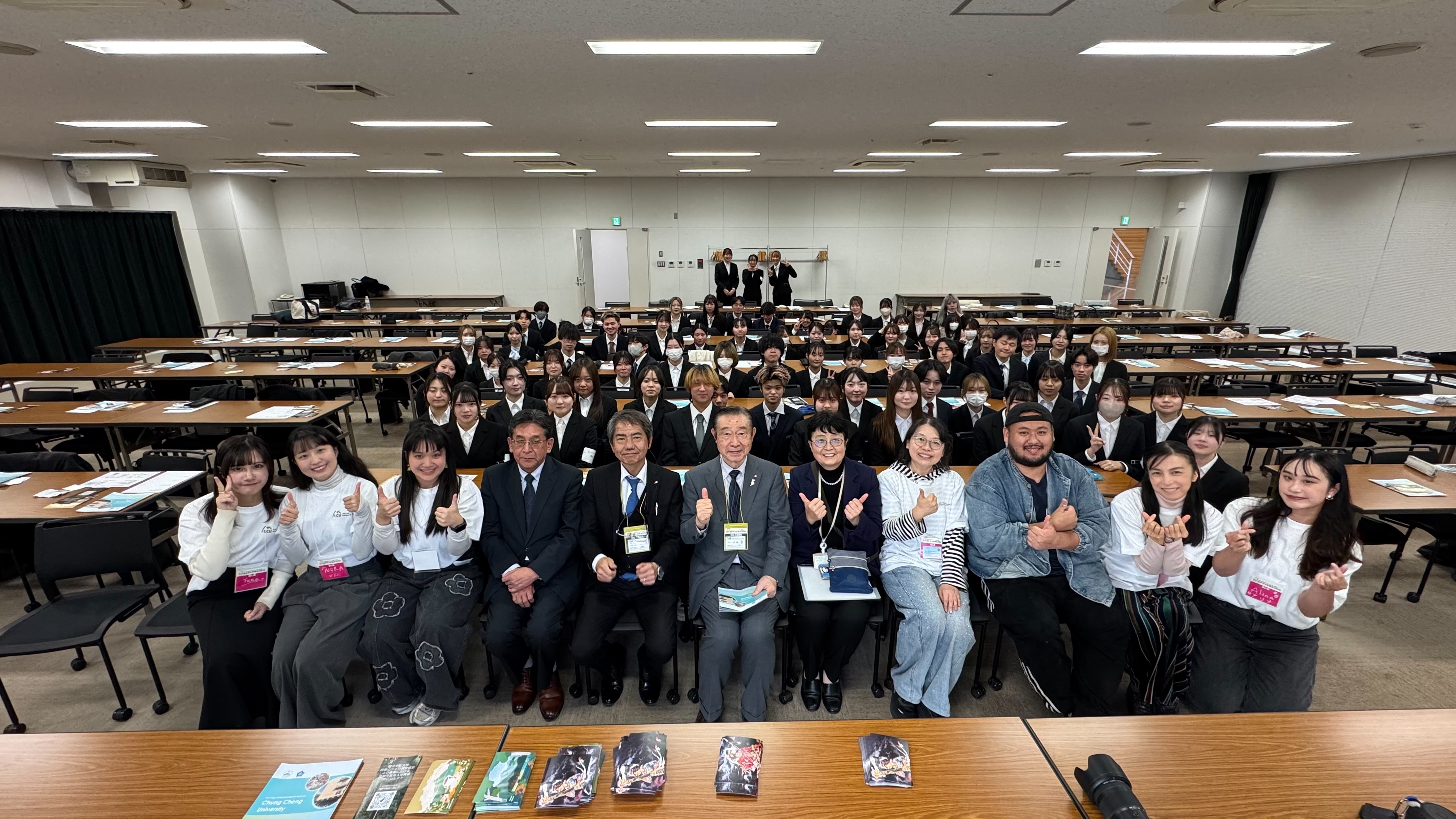
In addition to the exhibition, the team planned an exchange with faculty and students from Aoba Gakuin University and scheduled meetings on November 12 with two companies, U-media and Ogaru, to explore possible collaboration with Alishan's tribal industries in areas such as local information dissemination, agricultural management, and product promotion. Through these exchanges, the team hopes to understand different markets' needs regarding information on places of origin, product features, and forms of collaboration, and then evaluate feasible directions together with tribal partners.
Lien Ya-hui, Dean of the College of Management and Principal Investigator of the project, said:
University social responsibility requires a long-term commitment to working in local communities, understanding issues alongside our partners, and building trust. Our tribal partners' cultural knowledge and industry experience are an important source of learning for students. Universities, in turn, should consider how to use their teaching, research, and international connections to respond to local expectations. With farmers, faculty, and students taking part in this exhibition together, we hope to bring the experience and feedback from the exhibition back with us and discuss with the tribe what we can do next, so that students' growth and local development can support each other.
To continue the exchanges begun at the exhibition, the team also launched a trilingual website and a collaboration inquiry form, making it easy for businesses and the public to look up information and submit requests after the exhibition, while allowing the content students created to be used on an ongoing basis for cultural and industry promotion. CCU will bring the experience and feedback gained at this exhibition back to the classroom and the tribe as a reference for future teaching and field collaboration.
Further Reading: Media Coverage
The following links lead to external websites. Please refer to each media outlet's published story for the original reporting.
- Economic Daily NewsCCU's USR Project Teams Up with Tsou Farmers, Bringing the Aroma of Alishan Coffee to Japan's Tohoku (in Chinese)
- Liberty TimesCCU and Alishan's Tsou Head to a Japanese Trade Show to Raise Tribal Brand Visibility (in Chinese)
- The Epoch TimesCCU's USR Project Returns to a Tohoku Trade Show with Tsou Farmers (in Chinese)
- khb Higashi Nippon BroadcastingFrom Robots to Coffee: One of Tohoku's Largest Business Matching Events, Miyagino Ward, Sendai (in Japanese)